The most affecting detail in “Haunted Heart” is a small one: someone still prepares two cups. The person they love is gone, but the habit remains.
It is a familiar experience, plainly expressed. It also offers a good introduction to Milo Sarre and Anouk Revel, a virtual duo whose songs move between Halloween parties, family memories and the difficulty of letting someone go.
Behind the duo is Christophe Boeraeve, a Brussels-based writer and artistic director who works as Chris Beaurêve. He writes the original French lyrics and directs the project. Milo and Anouk are his fictional performers, able to take on different stories while remaining recognisable characters.
The two voices have a purpose. In “Haunted Heart,” each supplies a different memory of someone who is gone. In “Souls of the Subway,” they notice things around the carriage together. These exchanges give Beaurêve a way to tell a story through conversation, rather than asking one narrator to explain everything.
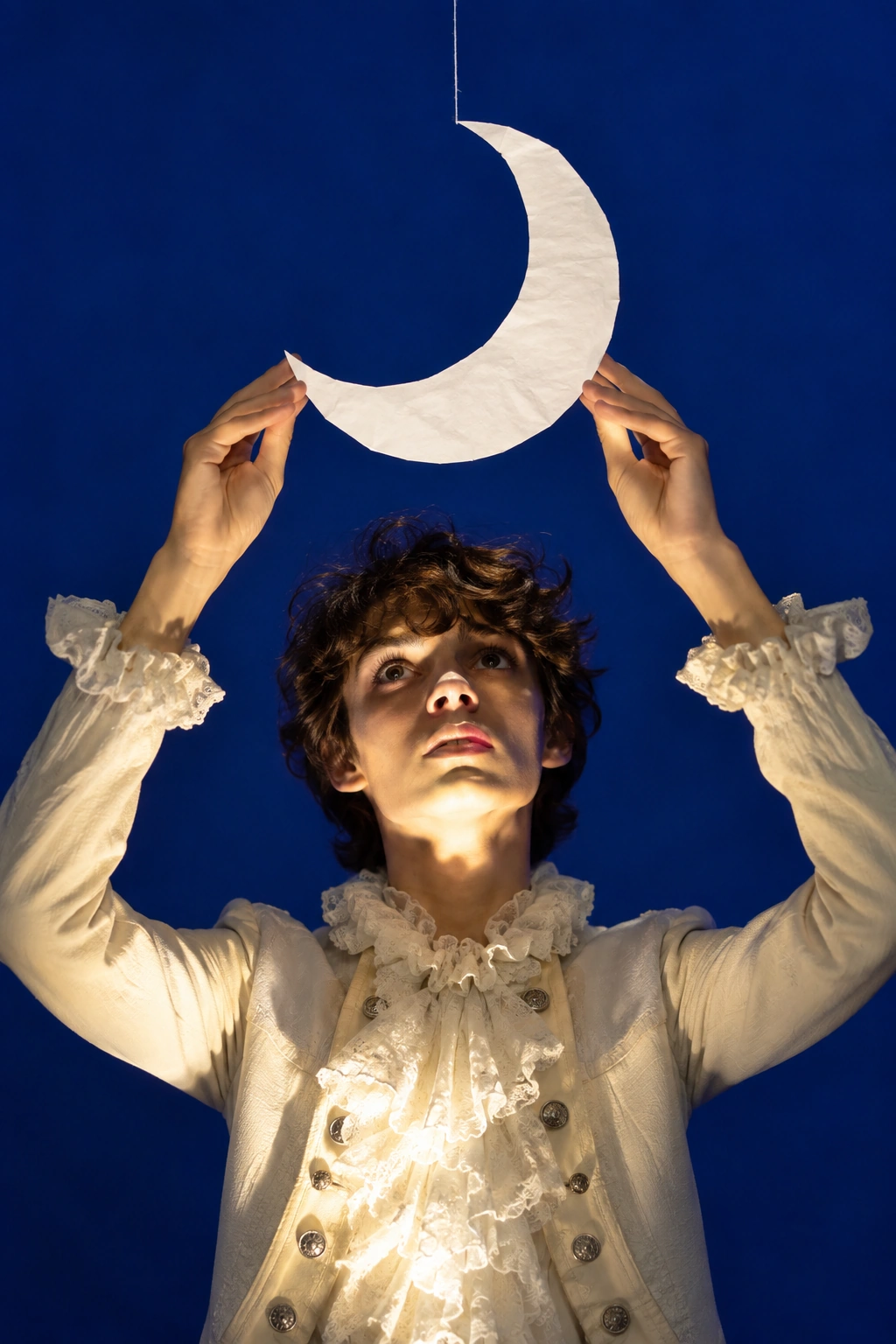

Four albums, two related pairs
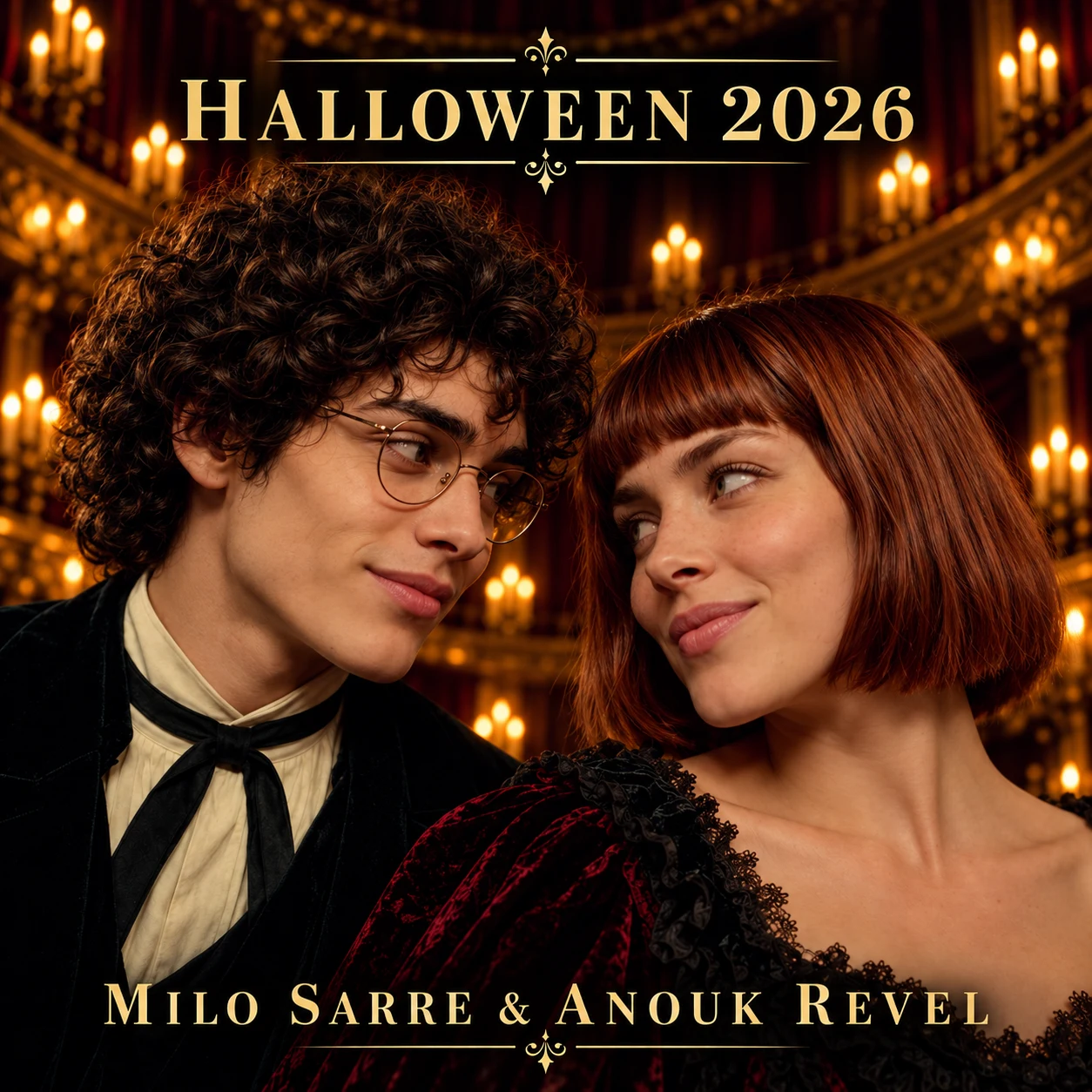
HALLOWEEN
HALLOWEEN is the French-language release, with fourteen tracks including alternative versions. “Minuit moins le quart,” for example, appears in separate Milo and Anouk interpretations, while “La Nuit des citrouilles” returns in several versions. The alternative takes make comparison part of the release, though the fourteen-track count includes repeated compositions.
Official album site ↗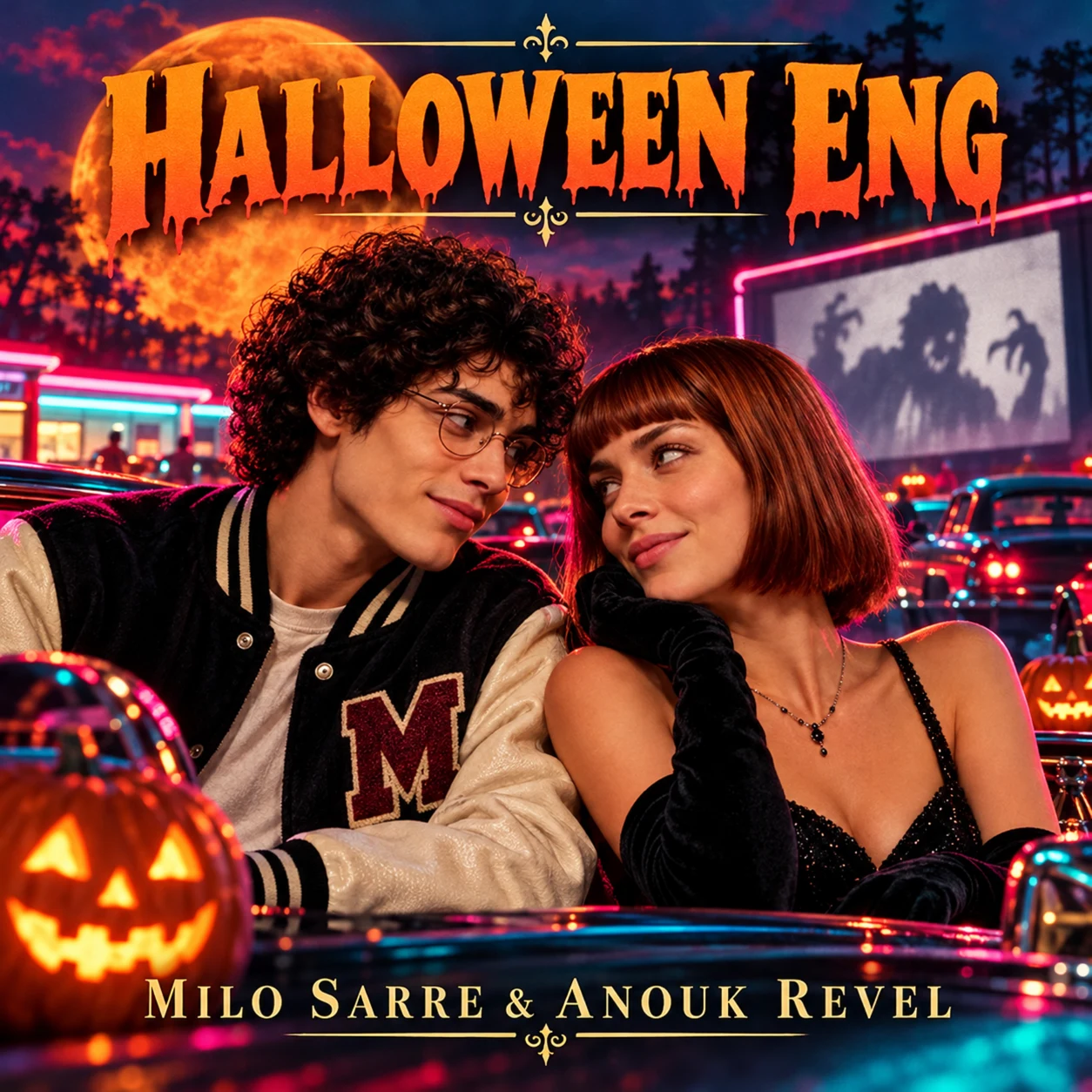
HALLOWEEN ENG
HALLOWEEN ENG contains fourteen English-language songs, with its own recordings and running order. Vampires, witches, ghosts and late-night encounters supply the setting. The sequence begins with “Quarter to Midnight” and ends with “Till the Last Stroke of Midnight,” giving the record the outline of a single night.
Official album site ↗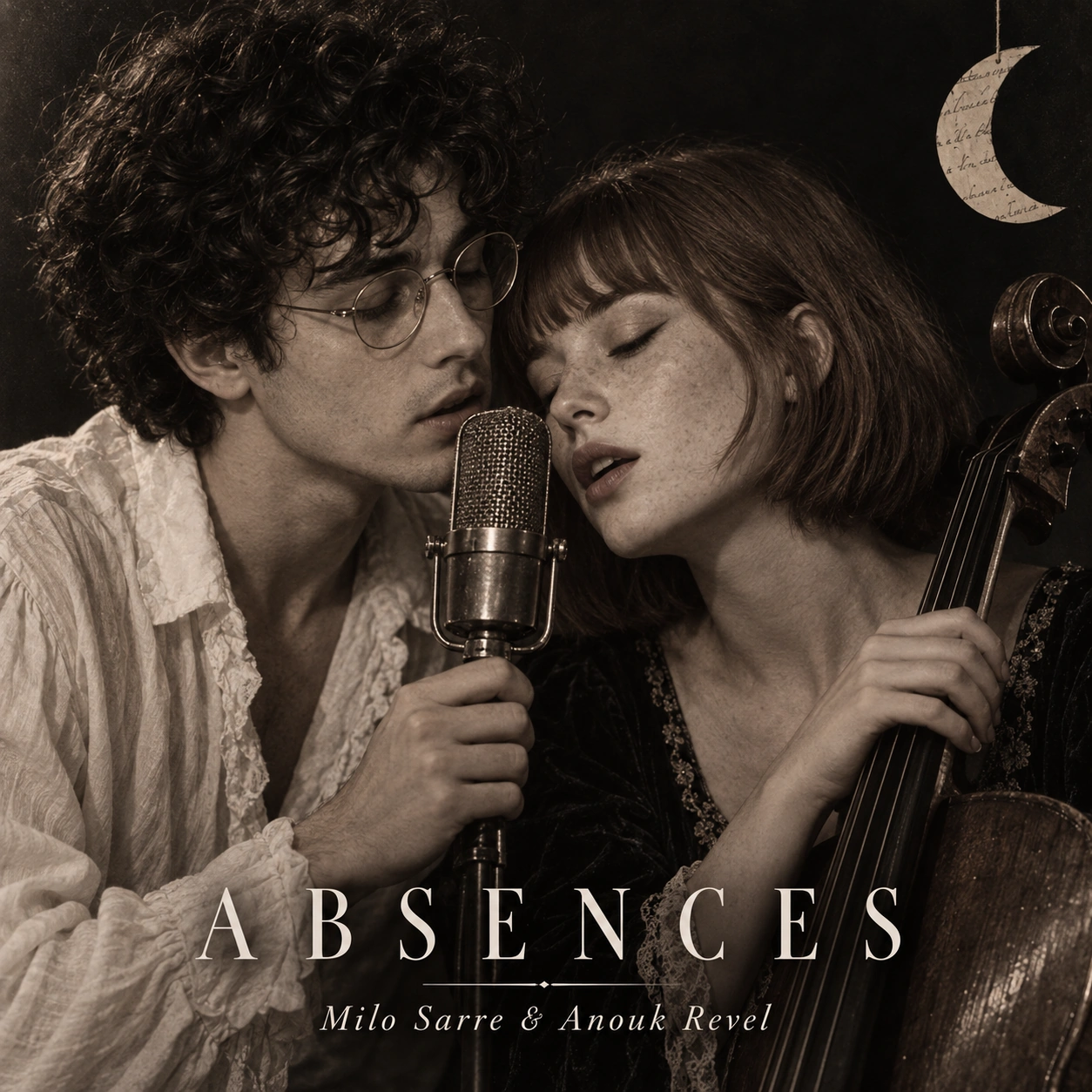
ABSENCES
ABSENCES turns towards bereavement, family and identity. Its thirty-five tracks include original and revised versions. Titles referring to handwriting, an answering machine and a spare room establish its approach: absence is explored through the things people leave behind. Anouk’s love for Léa is part of that world too; the songs make room for relationships as well as their aftermath.
Official album site ↗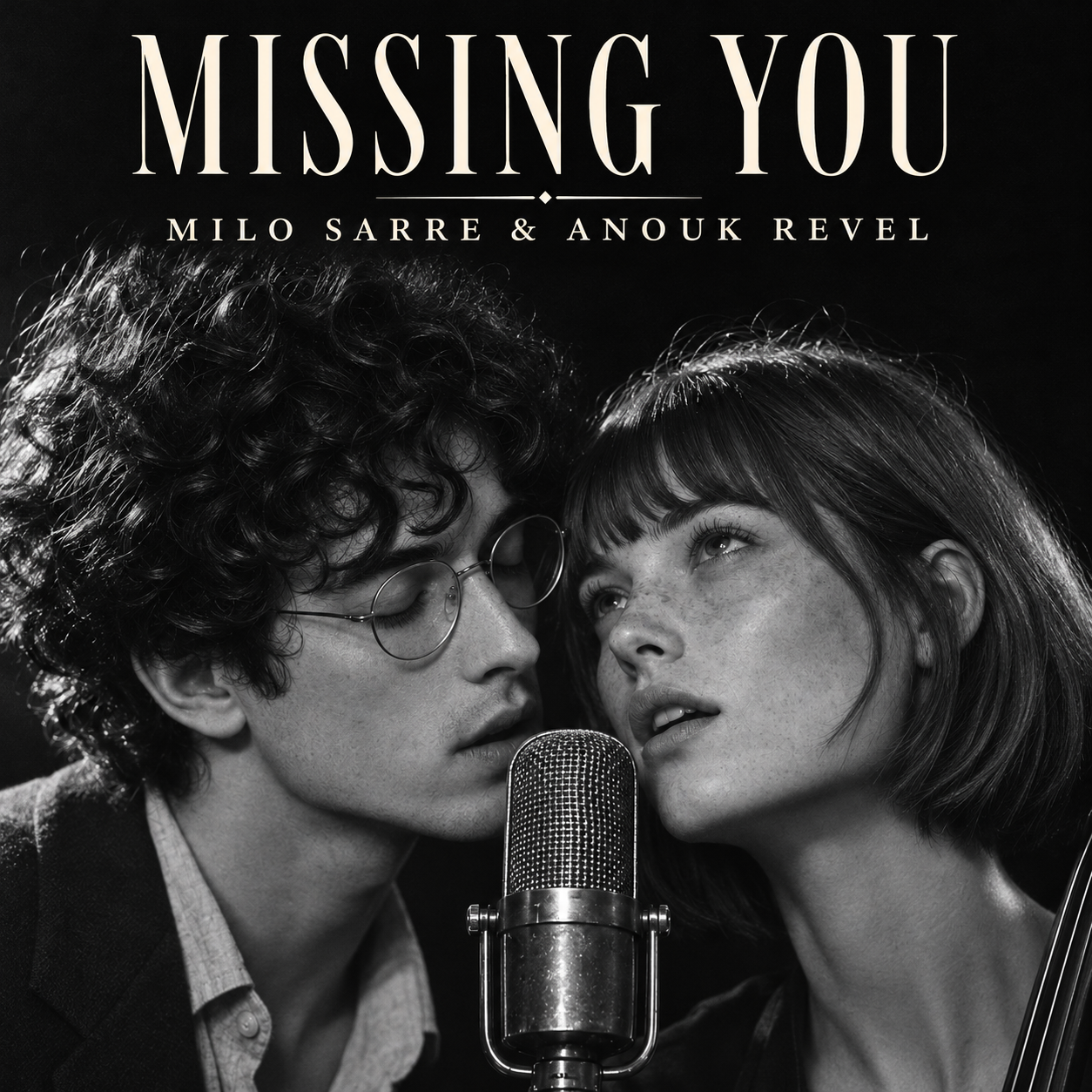
MISSING YOU
MISSING YOU carries that material into English across twenty-six main arrangements and nine alternatives. It is a substantial release, and the alternative arrangements invite comparison. For a newcomer, starting with a few songs is more manageable than working through all thirty-five tracks.
Official album site ↗When the party becomes personal
HALLOWEEN ENG is the most useful place to begin. Over its fourteen songs, a night out gradually becomes a conversation about loss.
Early on, the writing enjoys the ridiculousness of Halloween. “Pumpkin Night” puts a skeleton on the kitchen floor and a cat at the door waiting for milk. These domestic details give the party some personality. The supernatural guests belong to a recognisable neighbourhood, complete with awkward costumes and flirtation.
Later, the subject changes. “The House of Mirrors” brings the narrator’s dead mother into the family home. “Haunted Heart” follows with the belongings and routines that survive a relationship. Then “All Saints’ Day” takes remembrance to a grave, where the narrator shares news about the children and the house.
This run of songs is well judged. The ghosts who first arrived as party guests have become people the narrators miss. By “All Saints’ Day,” a visit to the grave means talking about the children and the house, as if the conversation at home had never quite ended.
That progression is more convincing than some of the individual phrases. Midnight, moonlight and invitations to dance recur often, and several passages would benefit from a less familiar image. Beaurêve’s writing is strongest when it becomes specific. A newspaper dated 1930 tells us more about an unsettling passenger than another reference to darkness could. A second cup makes grief understandable without explaining it at length. The published lyrics reward that attention to detail.
“Quarter to Midnight” and “Till the Last Stroke of Midnight” bookend the night. By the closing song, the invitation to dance includes people whose absence has become the album’s concern. The return to celebration makes more sense after those quieter subjects have been given their place.
Two songs to begin with
Haunted Heart
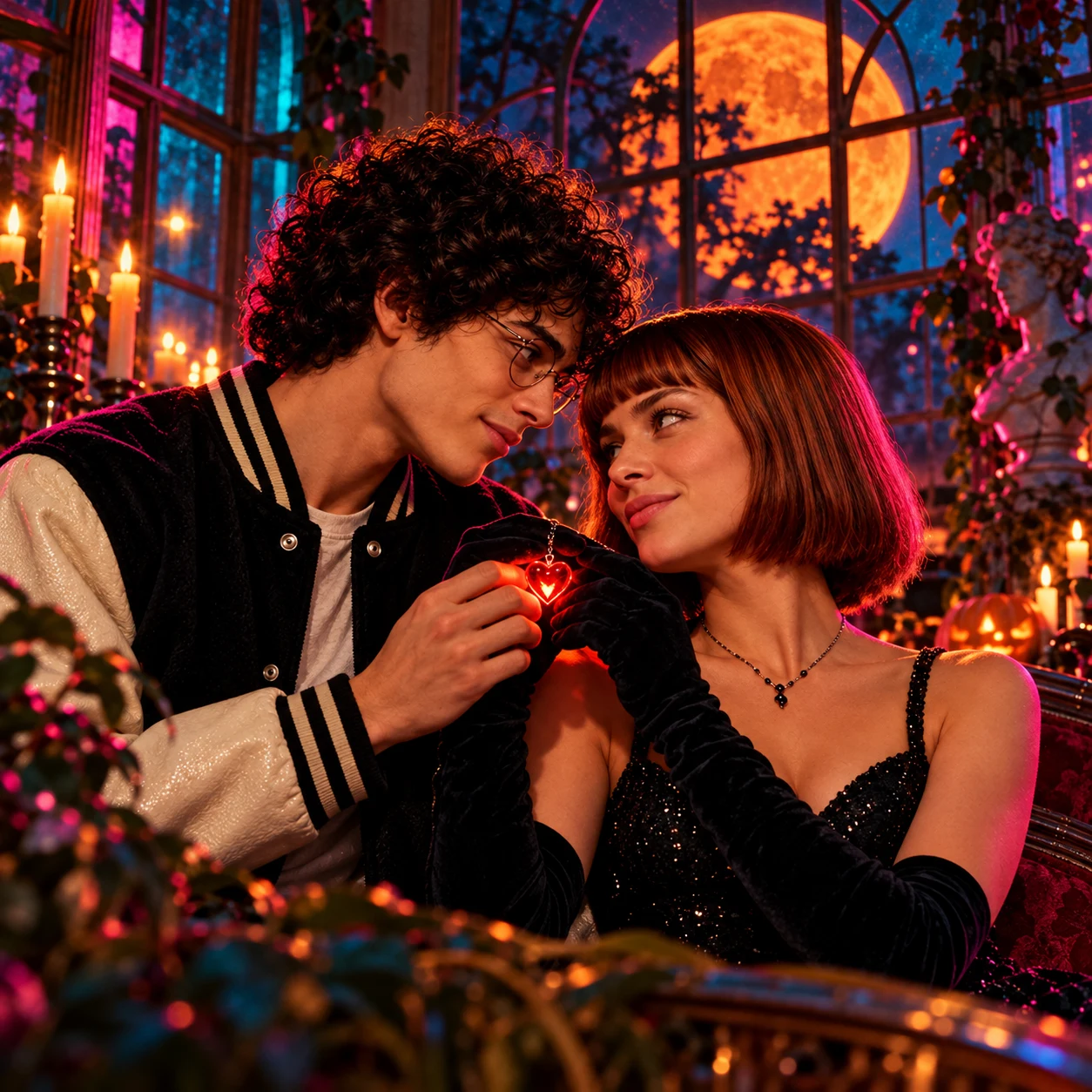
Start with “Haunted Heart”. The coat by the door, the worn sweater and the preparation of two cups make its central idea credible. The characters resist moving on because doing so would make the loss feel final. There is tenderness in that admission, and enough discomfort to keep it from becoming merely sentimental. It also connects the Halloween album to the more sustained concerns of Absences.
One voice describes setting out the cups; the other describes wearing the sweater. The exchange gives both parts something personal to contribute. Some of the chorus’s larger images are less distinctive: the everyday objects tell us more about this relationship than the cosmic comparisons do.
The piano-led opening suits that intimacy. When the refrain opens out, the melody gives the emotion a clear release, and the two leads move convincingly from restrained exchanges to fuller delivery. The form is familiar, but the tune and the commitment of the voices make it effective.
The fullest refrains are a little crowded. Some separation is lost when the voices and backing expand together, and the first two choruses could differ more in scale. Those reservations do not outweigh the song’s melodic appeal or the commitment of its vocal delivery. At 82/100, the melody and the feeling in the voices carry more weight in our assessment than the occasional congestion.
Listen on Spotify ↗Apple Music ↗Official lyric sheet ↗
Souls of the Subway

“Souls of the Subway” is the more distinctive recording. Its almost empty late train provides a setting that needs little embellishment. The old newspaper and long-closed platforms introduce the uncanny gradually, while the alternating parts allow the two characters to discover the passengers together. It is a compact piece of storytelling with a clear location, a developing unease and a reason for both performers to be present.
The warning to stay awake gives the passengers something to worry about beyond the strangers around them. A few lines in the second verse are less precise than the dated newspaper in the first; another detail of that quality would have made the scene stronger.
The steady electronic pulse is a good fit for the train journey. The voices remain clear against it, and their exchanges keep the verses moving towards the refrain. The male narration stays relatively understated; the female lead becomes more expansive in the final phrases. That contrast gives the last chorus somewhere to go.
The announcement-style bridge briefly reduces the texture before the final refrain, giving the last stretch a useful point of departure. The backing could change more in the second verse, and the brightest layers become a little glossy at the peak. Those are small reservations in a song whose arrangement supports its story so well. The memorable refrain, clear vocal exchanges and control of the final stretch earn it 88/100.
Listen on Spotify ↗Apple Music ↗Official lyric sheet ↗
Both songs benefit from Beaurêve’s eye for a small detail. The extra cup in “Haunted Heart” makes the loss personal; the old newspaper in “Souls of the Subway” makes an ordinary carriage unsettling. Those are good reasons to spend more time with Milo and Anouk.
The song scores
“Haunted Heart” earns 82.0/100 for its melody, expressive duet and emotional reach, with some congestion in its fullest passages. “Souls of the Subway” earns 88.0/100 for the way its refrain, vocal exchanges and moving electronic arrangement sustain the train-car story.
These are single-listener editorial assessments using the dimensions and weights of RJ-ASA v1.0. Each dimension is rated out of five; the weighted points sum to the score out of 100.
| Dimension | Weight | Haunted Heart | Souls of the Subway |
|---|---|---|---|
| Songwriting & memorability | 25% | 4.5/5 · 22.5 points | 4.5/5 · 22.5 points |
| Structure & development | 20% | 4.0/5 · 16 points | 4.5/5 · 18 points |
| Vocal expression | 15% | 4.5/5 · 13.5 points | 4.5/5 · 13.5 points |
| Production & sonic integrity | 20% | 3.5/5 · 14 points | 4.0/5 · 16 points |
| Artistic specificity | 20% | 4.0/5 · 16 points | 4.5/5 · 18 points |
| Overall / 100 | 100% | 82.0/100 | 88.0/100 |
Haunted Heart: why these ratings
- Songwriting & memorability · 4.5/5
- The refrain gives the domestic details an emotional release. Its melodic lift remains persuasive within a familiar ballad form.
- Structure & development · 4.0/5
- The quieter verses, expanding refrains and reduced bridge make the emotional progression clear. The repeated choruses could offer more contrast.
- Vocal expression · 4.5/5
- The exchange between the two leads gives the memories a personal character; the move from restraint to sustained delivery supplies much of the song’s force.
- Production & sonic integrity · 3.5/5
- Quieter passages leave the piano and voices clear. The fullest refrains are a little crowded, reducing separation without undoing the emotional effect.
- Artistic specificity · 4.0/5
- The shared vocal narrative and contrast between intimacy and scale support the central idea of a love that outlasts loss. The rock-ballad vocabulary remains familiar.
Souls of the Subway: why these ratings
- Songwriting & memorability · 4.5/5
- A memorable title refrain and conversational verses turn the train-car story into a coherent song rather than a sequence of spooky images.
- Structure & development · 4.5/5
- The staged opening, developing exchanges, announcement-style bridge and closing vocal tag give the journey a clear direction. The second verse changes the backing only modestly.
- Vocal expression · 4.5/5
- Understated male narration and the female lead’s more expansive final phrases bring different perspectives to the same scene without losing the exchange.
- Production & sonic integrity · 4.0/5
- The bass pulse, percussion and voices remain distinct. Vocal repeats reinforce the rhythm; a little brightness in the fullest passages is the main reservation.
- Artistic specificity · 4.5/5
- The moving electronic pulse, transit imagery and announcement-style bridge serve the same setting. The production gives the writing a clear identity.
Recording and review record
The assessed recordings are the creator-supplied HALLOWEEN ENG MP3s: “Haunted Heart,” 3:32, and “Souls of the Subway,” 3:17. Haunted Heart source recording ↗ · Souls of the Subway source recording ↗. Equivalence with the streaming masters has not been independently established.
These are single-listener editorial scores. RJ-ASA v1.0 remains an uncalibrated draft, rather than a panel standard. Recording details, assessment basis and reporting limitations are available in the review record.
These ratings apply to the two songs, not to the albums as a whole or to any music video. Artwork contributes no points.
Official links and credits
The creator submitted the project for editorial consideration. According to his production credits, Suno generates the music and voices, Logic Pro is used in production, and Sondo is among the visual tools. The music, imagery and English adaptation of Missing You involve generative AI under his direction. Milo and Anouk are fictional performers. All artwork shown here is credited to Christophe Boeraeve / Chris Beaurêve.
- HALLOWEEN ENG — official album site · HALLOWEEN — French edition
- ABSENCES — official album site · MISSING YOU — English companion
- Official press kit and released track list · Fourteen published lyric sheets
- Creator’s YouTube channel · Instagram
Sources checked 13 November 2026. Send a correction.